
How Home Visit Podiatry Makes Foot Care Easier for Elderly Patients
Foot care is a critical concern for elderly individuals, yet traditional podiatry often presents significant obstacles. Travel difficulties mobile podiatrist for elderly near me, physical strain, and unfamiliar clinical settings can deter seniors from seeking timely treatment. Home visit podiatry offers an alternative that addresses these challenges directly. By bringing care to the patient’s doorstep, it creates opportunities for more tailored and accessible interventions. Understanding how this approach benefits elderly patients requires examining the specific barriers and solutions involved.
Challenges Seniors Face With Traditional Podiatry Care
The challenges seniors face with traditional podiatry care often stem from mobility limitations and transportation difficulties People Podiatry. Many elderly individuals find it physically demanding to travel to clinics, especially when public transit or personal vehicles are not easily accessible.
Waiting times and exploring unfamiliar environments further compound their discomfort. These obstacles can lead to postponed or skipped appointments, adversely affecting foot health.
Additionally, the reliance on caregivers for transport reduces independence, conflicting with seniors’ desire for autonomy. The clinic setting may also present sensory and spatial challenges, causing anxiety or confusion.
Why Home Visit Podiatry Works So Well for Elderly Patients
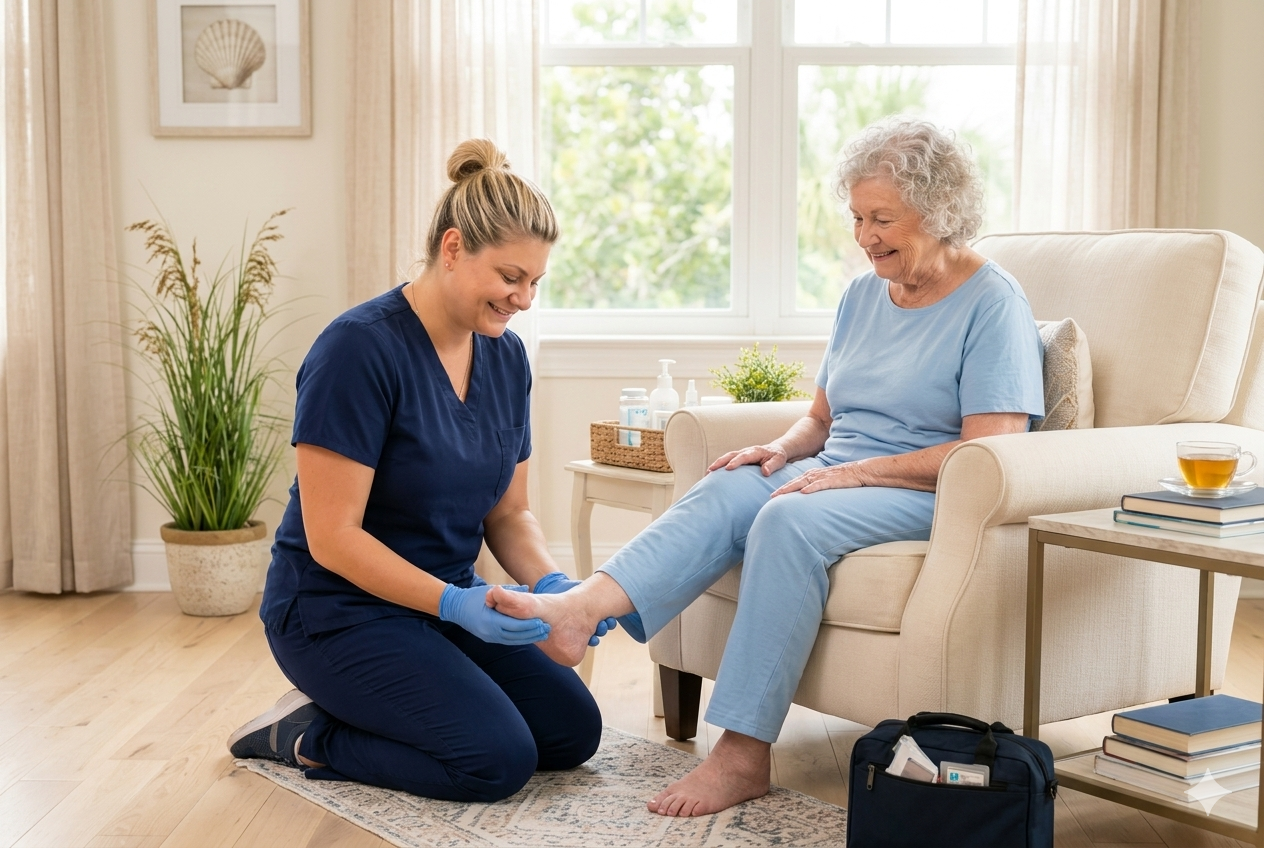
Because it eliminates the need for travel and reduces exposure to unfamiliar environments, home visit podiatry offers a practical solution tailored to the specific needs of elderly patients. This approach supports independence by allowing seniors to receive expert foot care in the comfort and privacy of their own homes.
It minimizes physical strain and anxiety often associated with clinic visits. Additionally, home visits provide podiatrists a thorough understanding of patients’ living conditions, enabling personalized care plans that address environmental factors affecting foot health.
This convenience fosters consistent treatment adherence and timely intervention, ultimately promoting mobility and quality of life. By respecting the elderly’s autonomy and freedom, home visit podiatry effectively bridges gaps in care that traditional settings may overlook.
Common Foot Problems Treated by Home Visit Podiatrists
When elderly patients receive podiatric care at home, a range of common foot problems can be effectively addressed. Home visit podiatrists frequently treat issues such as corns and calluses, which cause discomfort and restrict mobility.
They also manage fungal infections like athlete’s foot and toenail fungus, which can worsen without timely intervention. Additionally, they address ingrown toenails that can lead to pain or infection, and diabetic foot complications requiring careful monitoring to prevent serious outcomes.
Heel pain from plantar fasciitis and arthritis-related foot stiffness are also commonly treated. By providing treatment in a familiar environment, podiatrists help maintain foot health, supporting independence and reducing risks associated with untreated foot conditions.
This approach assures elderly patients can continue their daily activities with greater ease and confidence.
How Home Visit Podiatrists Customize Care for Each Patient
Addressing common foot problems in elderly patients requires more than standard treatments; it demands individualized care plans tailored to each person’s unique health status and living conditions. Home visit podiatrists assess factors such as mobility, chronic conditions, and home safety to design effective, personalized interventions.
Their approach often includes:
- Evaluating footwear suitability for comfort and support
- Adapting treatments to accommodate arthritis or diabetes
- Recommending exercises that enhance balance and strength
- Modifying care routines to align with daily living habits
- Ensuring easy access to follow-up care and monitoring
This customized attention helps maintain independence by addressing specific challenges, promoting healing, and preventing complications without disrupting daily life.
How to Schedule a Home Visit Podiatry Appointment
How can elderly patients and their caregivers efficiently arrange for a home visit podiatry appointment? The process typically begins by contacting a reputable podiatry service that offers home visits, either via phone or an easy-to-navigate website.
Providing essential information such as the patient’s location, medical history, and specific foot care needs allows the service to match the patient with a suitable podiatrist.
Scheduling is often flexible, accommodating preferred dates and times to respect the patient’s independence.
Clear communication about any mobility limitations or special requirements ensures the podiatrist arrives fully prepared.
Many services confirm appointments through reminders, minimizing missed visits.
This streamlined approach empowers elderly patients to maintain control over their foot care without sacrificing convenience or comfort.
Conclusion
Home visit podiatry considerably enhances foot care for elderly patients by addressing challenges associated with traditional clinic visits. By providing personalized, convenient care in familiar environments, podiatrists reduce physical and emotional barriers, improving treatment adherence and outcomes. This approach allows for tailored interventions that consider each patient’s living conditions and specific needs. Ultimately, home visit podiatry promotes better foot health, greater independence, and an improved quality of life for seniors.